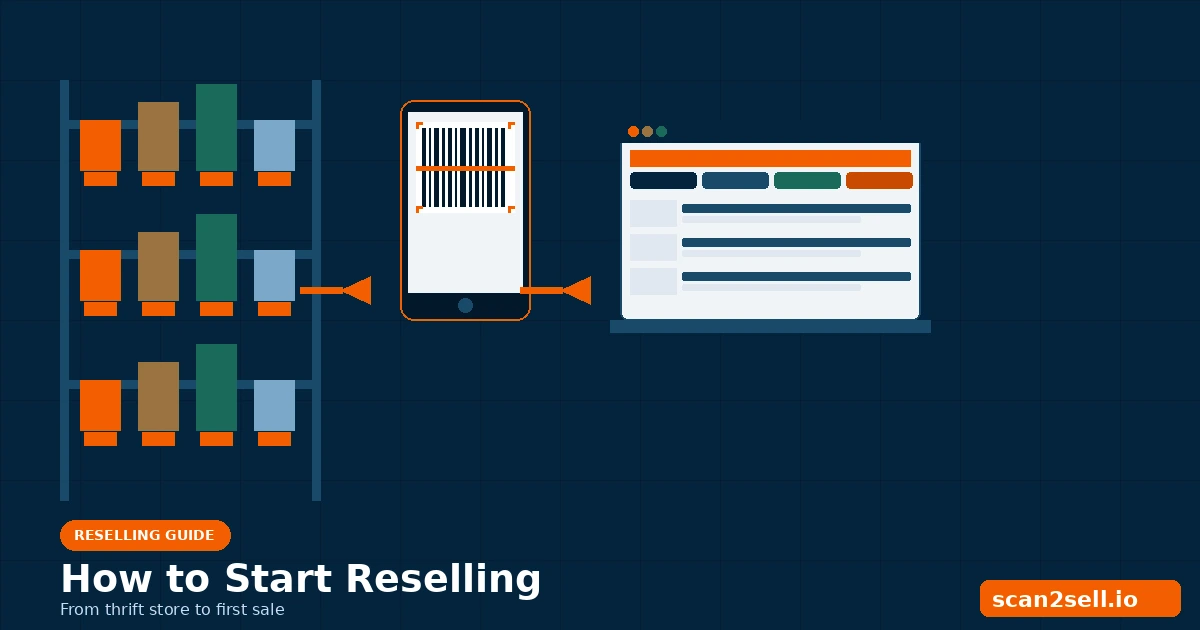
From your first thrift store run to your first Shopify sale. A practical, no-fluff guide for anyone curious about reselling as a side hustle or full-time income source.
Why Reselling Has Become a Real Income Source
Reselling is not a new concept. People have been buying low and selling higher for as long as commerce has existed. What has changed is the infrastructure around it. You can now source products locally, list them online in minutes, and sell to a buyer across the country without leaving your house. That combination of low startup cost and accessible tooling is what has made reselling one of the most talked-about side hustles of the last few years.
This guide is written for someone who is genuinely curious but has not yet made a first purchase with reselling in mind. It covers sourcing, pricing, listing, selling channels, and the tools that actually make a difference when you are working with real physical inventory.
Step 1: Understanding What Makes a Good Resell Item
Before you spend a dollar, you need a mental model for what you are looking for. Not everything is worth reselling. The items that tend to work well share a few traits: they are in demand by a specific buyer, they have a clear reference price you can look up, and the margin between what you pay and what someone will buy it for is wide enough to make the effort worthwhile.
Categories that consistently perform for resellers include brand-name clothing and shoes, electronics and accessories, collectibles and toys, books, vinyl records, sporting goods, and health and beauty products that are still in their original packaging.
The best resell items are easy to identify, easy to price, and easy to describe. If you cannot figure out what something is or what someone would pay for it in under two minutes, move on.
Step 2: Where to Source Inventory
Sourcing is the foundation of the business. Where you source determines your margins, your time investment, and what kind of inventory you end up with.
Thrift Stores — Stores like Goodwill and The Salvation Army are the classic entry point. Prices are low, inventory rotates constantly, and you can walk out with a bag of sellable items for under $50. Go on weekdays when new stock has been rotated onto the floor. Learn the restock schedule at your local stores and pay attention to which sections consistently offer better margins.
Garage Sales and Estate Sales — Garage sales can yield excellent finds for electronics, tools, and sporting goods, often priced by sellers who just want things gone. For estate sales specifically, EstateSales.net and MaxSold list upcoming sales by zip code. MaxSold in particular runs organized online estate auctions, which is worth knowing about if you want to bid on lots without showing up in person. Estate sales from long-term homeowners often have decades of accumulated branded and collectable goods at prices that leave real room for margin.
Liquidation Pallets — This is where reselling can scale quickly. Retailers offload returned and excess merchandise through liquidation channels at a fraction of retail. Two sources that are well-regarded in the reseller community are Bluebird Liquidation and Firesale Boxes. Both are known for transparency in how lots are described, which matters when you are spending real money on inventory you have not physically seen. Start with a small box or lot before committing to a full pallet. Unmanifested pallets carry more risk but can also carry better margins once you know what you are doing.
Step 3: Researching Your Pricing Before You Buy
Pricing research happens before you buy, not after. This is the discipline that separates resellers who make money from those who accumulate inventory they cannot move.
The tool most resellers rely on is eBay's sold listings. Search the item, then filter by Sold Items to see what buyers have actually paid, not just what sellers are asking. There is a meaningful difference between those two numbers. Amazon is also useful for products with barcodes, where the current pricing and sales rank give you a sense of demand and how many sellers you would be competing with.
For clothing, Poshmark and Depop both have sold listing history. For collectibles, WorthPoint is a paid subscription service that gives you access to an enormous archive of sold auction and marketplace results specifically for antiques, collectibles, and vintage items. If you plan to deal in that space seriously, the subscription is worth evaluating. Google Lens is also a genuinely useful free tool: point your phone camera at any object and it will surface visually similar items from across the web, giving you a fast starting point for identifying what something is and where it has sold before.
A general working rule: you want to pay no more than 25 to 33 percent of what you expect to sell the item for. That leaves room for platform fees, shipping, and the occasional item that takes longer to move.
Example breakdown on a $30 sale. Fees vary by platform. Always check actual shipping cost before setting your price.
Step 4: Setting Up Your Selling Infrastructure
Where you sell matters, and the answer for most serious resellers is not just one platform. It is several platforms with one central hub managing them all.
Shopify is that hub. Here is why this matters practically: Shopify supports sales channel connections to platforms including Facebook Marketplace, Etsy, eBay, and Whatnot through apps and Shopify Marketplace Connect. With Whatnot specifically, you can publish products directly from your Shopify catalog and sell during livestreams or through their always-on marketplace, with orders and inventory syncing back to Shopify automatically. You do not end up overselling the same item to two different buyers on two different platforms because your inventory count is always coming from one source of truth.
The biggest mistake new resellers make is treating each platform as a separate business. One hub, multiple storefronts. Your inventory lives in Shopify. Everything else is a sales channel.
Step 5: Listing Your Products with Scan2Sell
Listing is where most resellers stall. You come home from a thrift run with 40 items and the thought of writing 40 individual titles and descriptions is exhausting enough to make you leave them in the bag indefinitely.
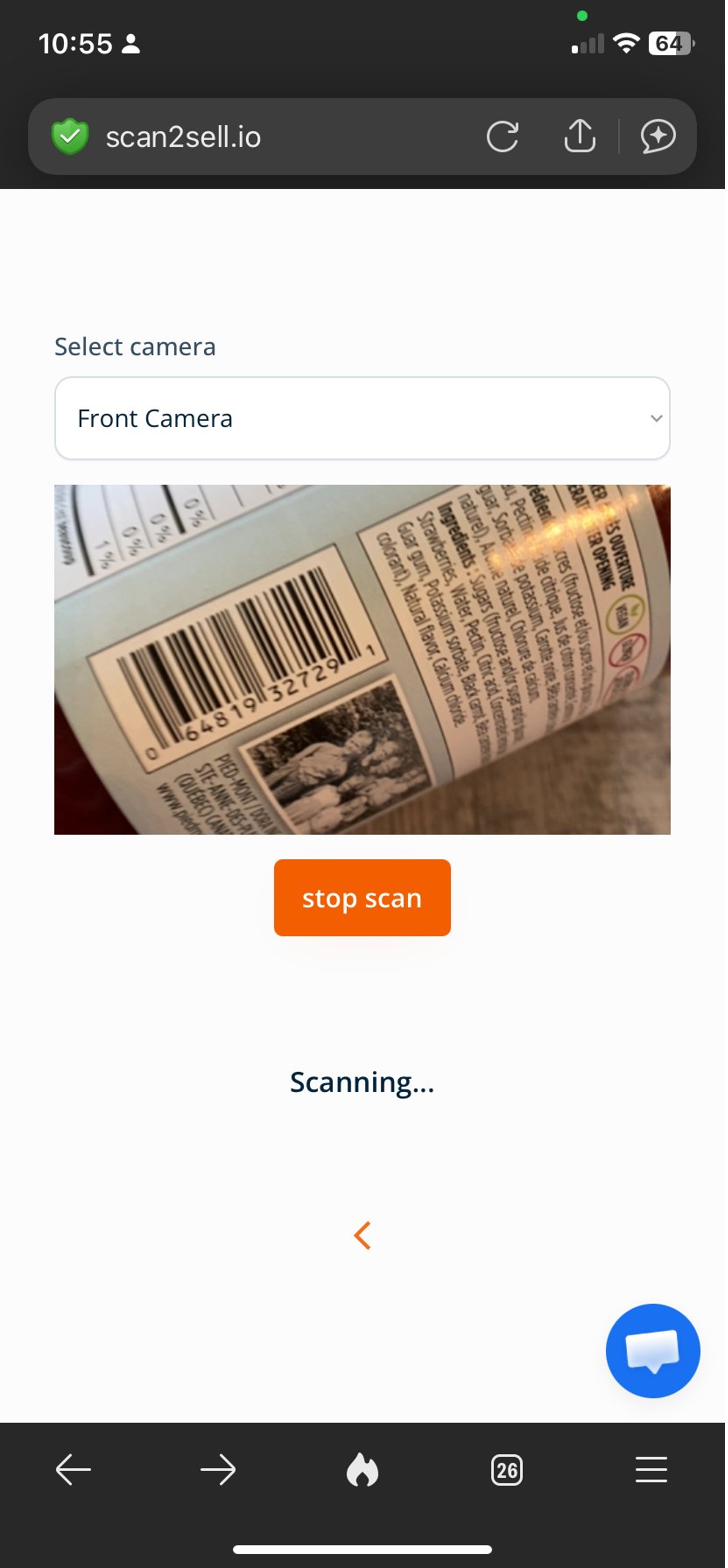
Scan2Sell is a Shopify app built for exactly this problem. It connects to your phone camera or a Bluetooth handheld scanner. When a barcode is scanned, structured product information including a title, description, and product images appears in a pre-filled listing form. You review it, add your price and quantity, and create the listing. You approve every listing before anything goes live.
The Scan2Sell home screen inside Shopify. Five input methods in one place: Bluetooth scanner, camera scan, photo, Scan Queue for bulk, and CSV import.
For items without barcodes, such as vintage clothing or handmade goods, the Take Picture option lets you snap a photo and the app uses it as a reference to help generate a structured listing. You still review and edit everything. For high-volume days, especially after a pallet delivery, the Import CSV option lets you enter barcodes in a spreadsheet and process them all at once. Download Scan2Sell's own template, enter your barcodes, upload the file, and products queue up as ready-to-review listings without scanning each one individually.
The live camera scanner reading a barcode. Point and hold steady. The app does the rest.
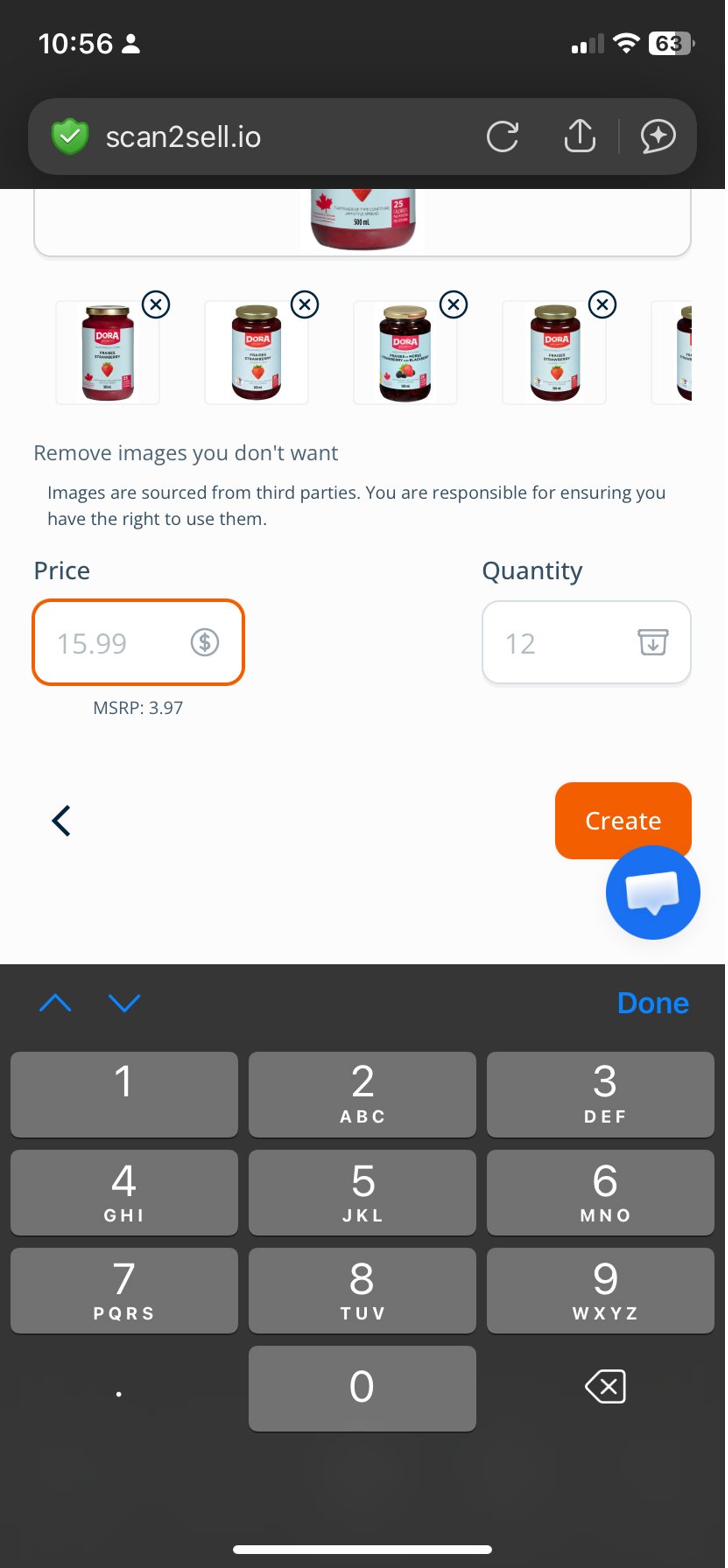
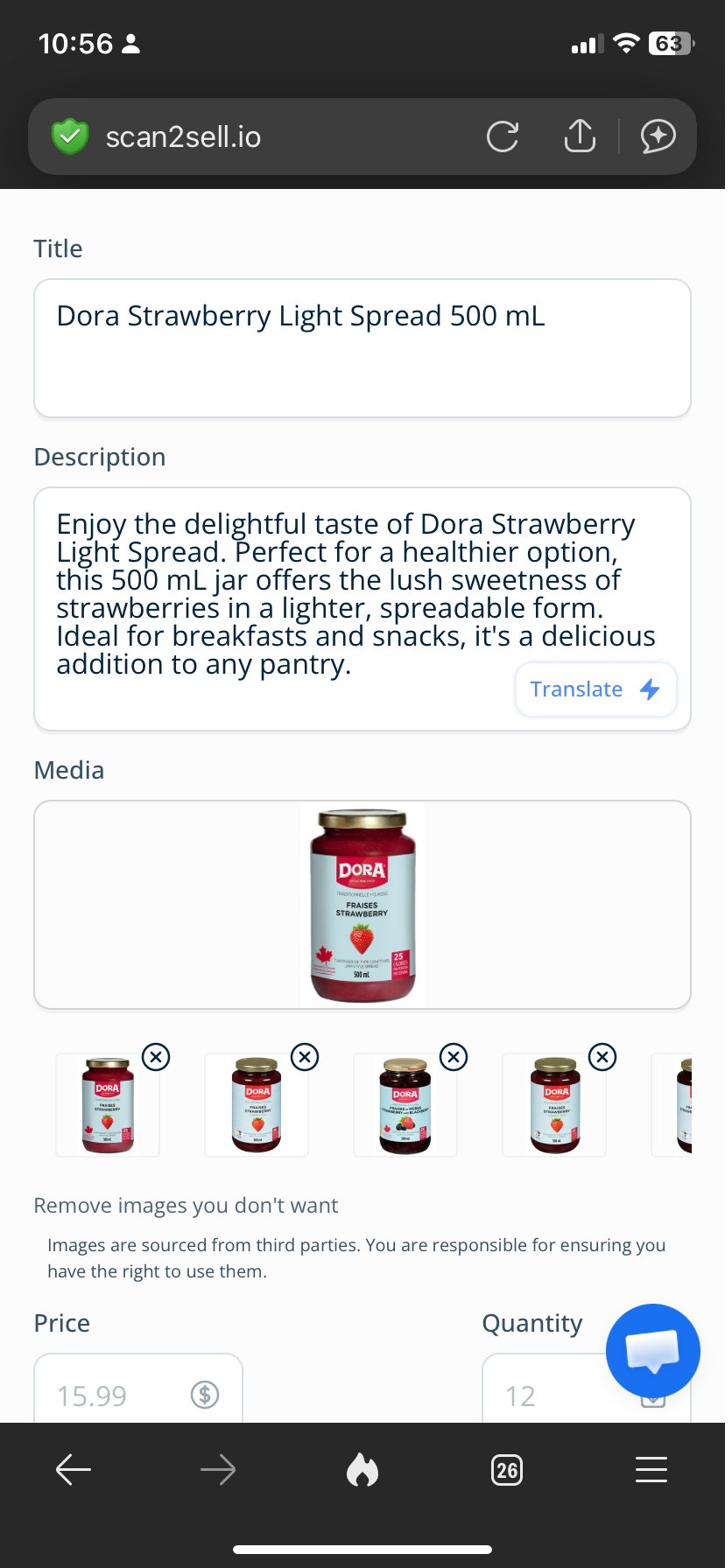
After scanning, the title, description, and product images appear in a ready-to-review listing form.
Once you have reviewed the listing details, you add your price and quantity, remove any images you do not want, and hit Create. The listing goes into your Shopify store as a draft or live product depending on your settings.
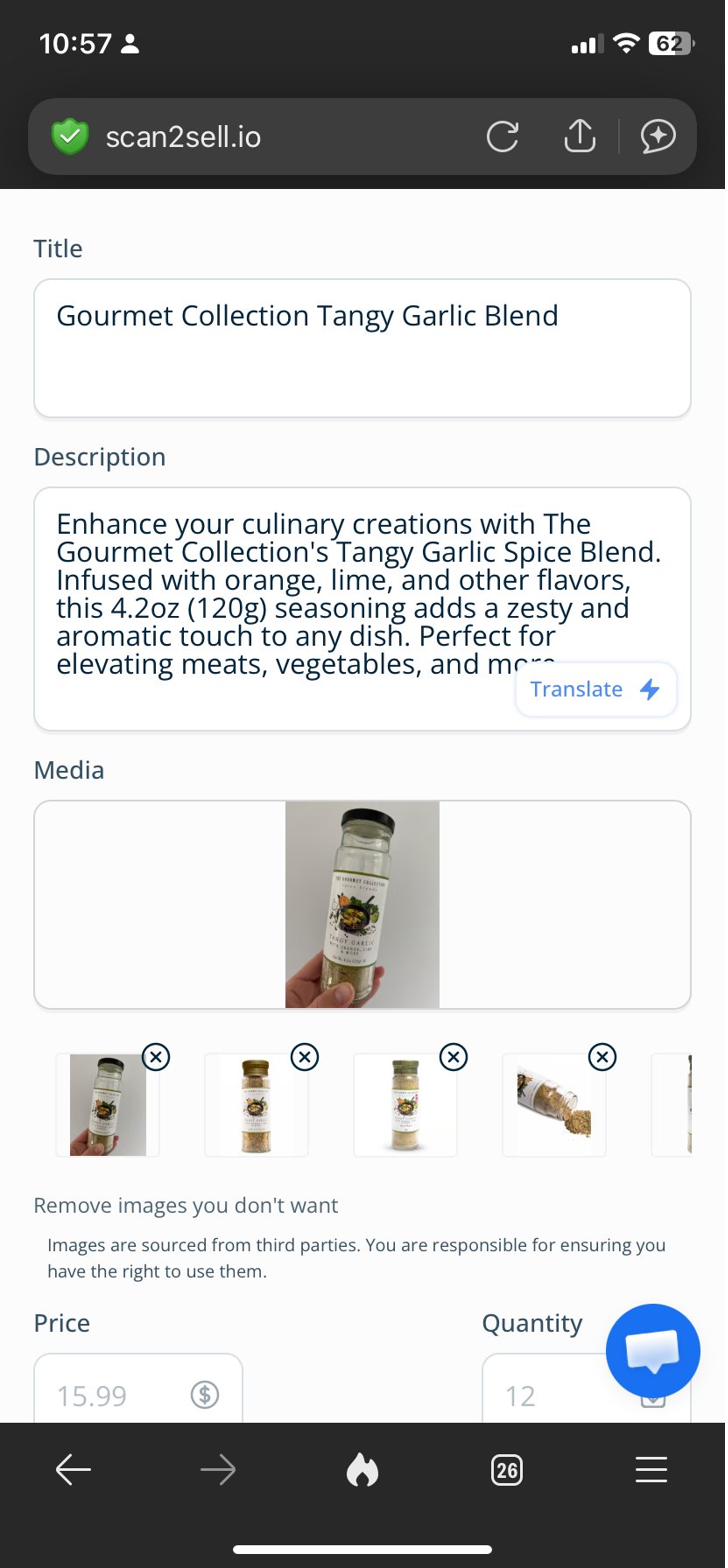
Set your price and quantity before publishing. The MSRP reference is shown so you have a market anchor while you decide.
Scan2Sell costs $99 per month for unlimited scans, which is designed for sellers who are processing real volume rather than listing one item a week.
Bulk Listing with the CSV Import
If you have just taken delivery of a pallet or a large liquidation lot, scanning individually is still an option but there is a faster path. The CSV import in Scan2Sell lets you build a list of barcodes in a spreadsheet, upload it, and have the app generate structured listings for all of them in one pass. Each listing still goes through your review before it publishes to Shopify.
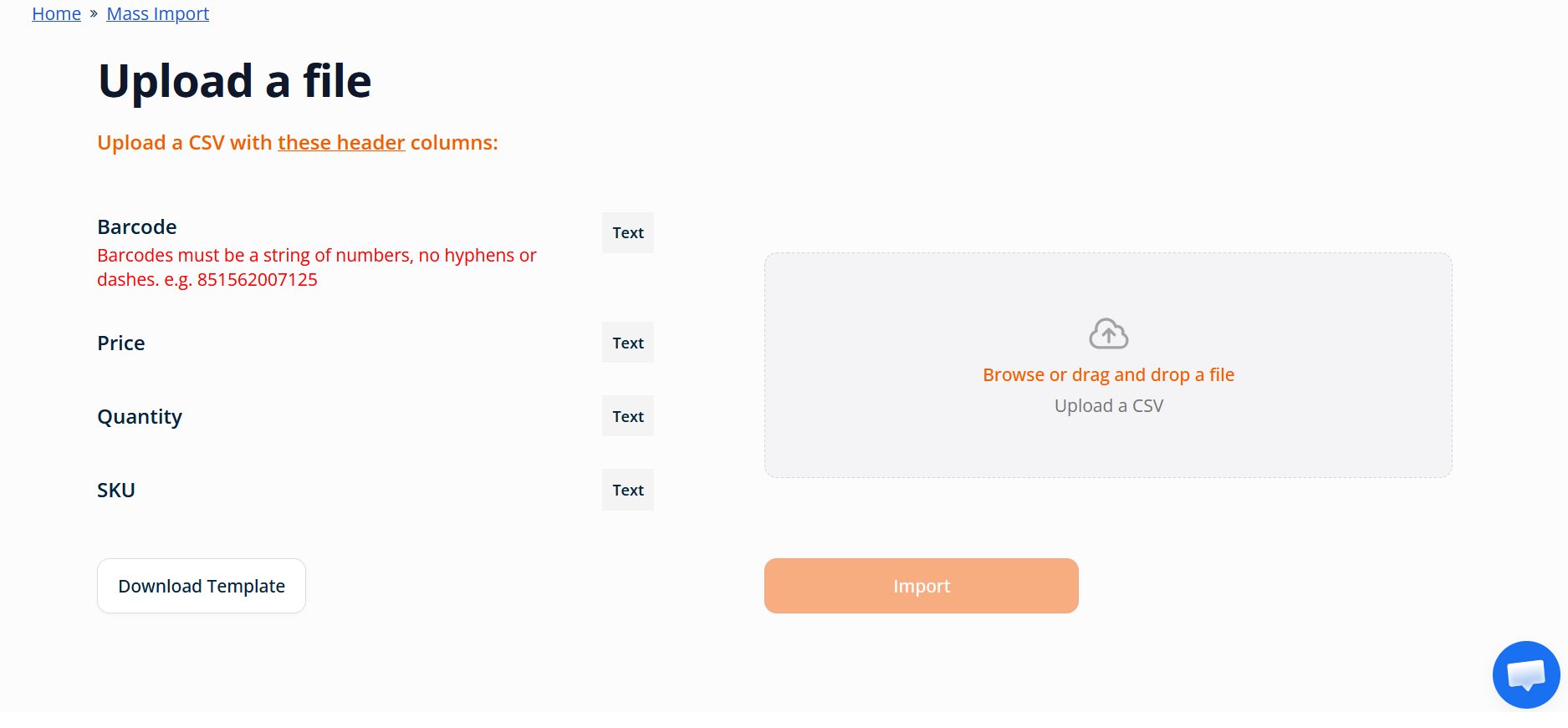
The CSV upload screen in Scan2Sell. Download the template, enter your barcodes, upload, and the listings generate in bulk.
Writing Listings That Actually Sell
Even with a scanning workflow doing the heavy lifting on structure, your listing still benefits from your attention. Check that the title includes the brand, model or style, size, and condition. Set a price based on your sold listing research, not a guess. For used or vintage items, add an honest condition note in the description. Buyers on every platform have seen enough vague listings to be wary of ones that hide the important details.
Photography does not need to be elaborate. A clean background, good natural light, and multiple angles from your phone camera will outperform a complicated setup almost every time.
Selling Channels: Where Your Products Will Actually Move
Different products sell better on different platforms. Knowing where to list is almost as important as what to list.
eBay remains the most versatile reselling platform for physical goods. The audience is enormous, search intent is high, and the sold listing data makes it your best pricing research tool. It works particularly well for electronics, collectibles, books, and branded items with barcodes.
Facebook Marketplace is strong for local pickup items, furniture, and anything bulky where shipping would eat the margin. It is also worth using for items under $30 where fees on other platforms would leave too little.
Etsy is the right home for vintage items over 20 years old, handmade goods, and anything with a craft or aesthetic angle. The buyer on Etsy is looking for something specific and is willing to pay a premium for it.
Whatnot is a live video selling platform that has grown quickly among resellers of collectibles, trading cards, vintage clothing, and toys. Live selling works differently from a standard listing: you are running real-time auctions to a live audience. The community aspect drives demand in a way that static listings cannot replicate. Notbot is an automation tool that works alongside Whatnot to help manage your live show logistics, worth exploring once you are ready to scale your live selling operation.
Because Shopify supports channel connections to these platforms, your listings can be managed from one place with inventory syncing back to Shopify. When an item sells on eBay, the quantity updates in Shopify, which updates everywhere else.
Tools That Make the Workflow Faster
The eBay app on your phone lets you check sold prices while you are standing in a thrift store aisle before you commit to buying. This habit alone saves more money than almost any other practice in reselling.
Google Lens, built into most Android phones and available on iOS via the Google app, lets you point your camera at any object and surface visually similar items from the web. For unlabeled, unbranded, or unusual items where you do not have a barcode to scan, it is the fastest way to figure out what something is worth investigating further.
For collectibles research, WorthPoint provides deep historical sold data on antiques, vintage items, and collectibles across major auction houses and platforms. It is a paid subscription, but for anyone focused on that category it is a more comprehensive reference than eBay alone.
A Bluetooth barcode scanner, such as the Socket Mobile S700, pairs with your phone and lets you scan product after product without opening your camera every time. Scan2Sell supports Bluetooth scanners alongside the phone camera, so the upgrade is seamless when you are ready for it.
A postal scale, poly mailers in a few sizes, and an account with Pirate Ship for discounted USPS and UPS rates round out a functional starting setup. Shipping costs catch new sellers off guard more often than platform fees. Know what something will cost to ship before you price it.
Where to Sell: Platform Quick Reference
Each platform has a different buyer and a different sweet spot. Know where your item fits before you list it.
eBay
Best for electronics, collectibles, branded goods with barcodes, and anything with a clear model number. Massive buyer base. Use sold listings for pricing research before you source.
Facebook Marketplace
Best for local pickup items, furniture, and lower-priced goods where platform fees on other sites would shrink the margin. Great for heavy or bulky items that are expensive to ship.
Etsy
Best for vintage items over 20 years old, handmade goods, and anything with an aesthetic or craft angle. Buyers here pay a premium for the right item. Not suited for everyday branded goods.
Whatnot
Live video selling for collectibles, trading cards, vintage clothing, and toys. Real-time auctions to a live audience drive demand differently than static listings. Community-driven and fast-moving.
Shopify (Your Hub)
Your central inventory source. All other channels connect to it. When something sells anywhere, the count updates here. One product, multiple storefronts, no overselling.
Instagram and TikTok Shop
Worth exploring once you have consistent inventory. Best for visually interesting items. Shopify integrates with both, so existing listings can extend here without starting over.
Your First 30 Days: A Realistic Starting Sequence
Not a guarantee. A sequence that gives you real experience without overcommitting before you know what works for you.
Week 1: Research Before You Buy
Spend time on eBay looking at sold listings for categories you know. Build a feel for what moves and at what price. Visit one thrift store without buying anything, just researching on your phone with Google Lens and eBay.
Week 1 to 2: Your First 10 Items
Set a budget of 0 to $100. Buy 10 items you have researched and feel confident about. These are learning purchases as much as profit attempts. Track what you paid for each one in a simple spreadsheet.
Week 2: Set Up Shopify and Scan2Sell
Create your Shopify store. Install Scan2Sell. List your first items by scanning barcodes where available and using the photo mode for items without them. Review every listing before it goes live.
Week 2 to 3: Connect Your Sales Channels
Add eBay and Facebook Marketplace as sales channels in Shopify. Your listings sync across. You are now visible to buyers on multiple platforms without duplicate work.
Week 3 to 4: Sell Something and Ship It
Your first sale is educational. Pay attention to the fees, the shipping cost, and what the actual margin was. Adjust your buying criteria based on what the real numbers tell you.
Month 2 onward: Scale What Works
Identify the sourcing channel and product category that gave you the best margins. Source more of that. Consider a small liquidation box from Bluebird or Firesale Boxes if your process has solidified.
What Actually Determines If You Make Money
The resellers who do well treat it like a business from day one, even at small scale. They track what they paid, what they sold for, what the fees were, and what the actual margin ended up being. A simple spreadsheet works fine for this. The goal is to know precisely which types of items and which sourcing channels are actually profitable for you, not just feel good about the occasional win.
They also ship quickly. A fast shipping time leads to better feedback, and better feedback makes future buyers more comfortable purchasing. The resellers who struggle are usually buying without checking prices first, underpricing without accounting for fees, or holding inventory too long waiting for a price the market will not support.
Disclaimer: This article is based on publicly available information and general knowledge about reselling and e-commerce. It is intended for informational purposes only. Results as a reseller will vary significantly based on individual effort, sourcing decisions, market conditions, and many other factors. Nothing in this article should be taken as professional financial, legal, or business advice. Please consult a qualified professional for guidance specific to your situation.
Frequently Asked Questions
Do I need a business license to start reselling?
Requirements vary by location. In many places, small-scale reselling does not require a formal business license to get started. However, you will likely need to report income to your tax authority once earnings exceed a certain threshold. Check your regional government's small business resources and speak with a local accountant before you scale up significantly.
What is the best free tool for identifying items I find at thrift stores or garage sales?
Google Lens is the most accessible free option. Point your camera at any object and it surfaces visually similar items from across the web, giving you a fast starting point for identifying something and seeing where it has sold. For collectibles specifically, eBay sold listings are still the most reliable free pricing source. WorthPoint is a paid option with deeper historical auction data if you are dealing in antiques or higher-value collectibles regularly.
Why use Shopify instead of just selling directly on eBay or Facebook?
Selling only on eBay or Facebook means your inventory lives in those platforms separately. Shopify can connect to eBay, Facebook Marketplace, Etsy, Whatnot, and others via apps and Shopify Marketplace Connect. When something sells anywhere, the inventory count updates in Shopify automatically. This prevents overselling the same item to two buyers and gives you one place to manage everything.
How does Scan2Sell handle items without barcodes?
For items without barcodes, Scan2Sell has a photo mode. You take a photo of the product and the app uses it as a reference to help generate a structured listing with a title and description. You review and edit everything before the listing is created. Nothing publishes automatically regardless of which input method you use.
Are liquidation pallets worth it for a beginner?
They can be, but the risk is higher than thrift sourcing because you are spending more money upfront on inventory you may not have inspected in person. Starting with a small manifested box from a vetted source like Bluebird Liquidation or Firesale Boxes gives you experience with the liquidation model without the risk of a full pallet. Build your understanding of what sells before you scale the spend.
Ready to List Your First Items?
Scan2Sell connects to your Shopify store and turns barcodes into ready-to-review listings in seconds.
Get Scan2Sell on the Shopify App Store